
Search Florida Court Records
Florida court records are kept by the Clerk of the Circuit Court in each of the state's 67 counties. These files hold case data from civil, criminal, family, traffic, and probate matters filed across Florida. You can search most court records for free through your county clerk's online portal. The state also runs the Appellate Case Information System for appeals court cases in Florida. Each clerk's office lets you look up case dockets, view filed documents, and check court dates. Search from home or visit a local courthouse in person to find Florida court records.
Florida Court Records Quick Facts
How to Find Florida Court Records
Florida's court system is split into trial courts and appeals courts. The state has 20 judicial circuits. Circuit courts are general jurisdiction trial courts that handle jury trials, major criminal cases, and civil disputes across Florida. County courts sit below them. They deal with small claims, traffic tickets, and misdemeanor cases. Under Florida Statute Chapter 119, all state, county, and municipal records are open for personal inspection. Court records fall under this law. Anyone can request them.
The Florida Courts website is the main hub for court info across the state. It connects you to each circuit, self-help tools, and case search portals for Florida court records.
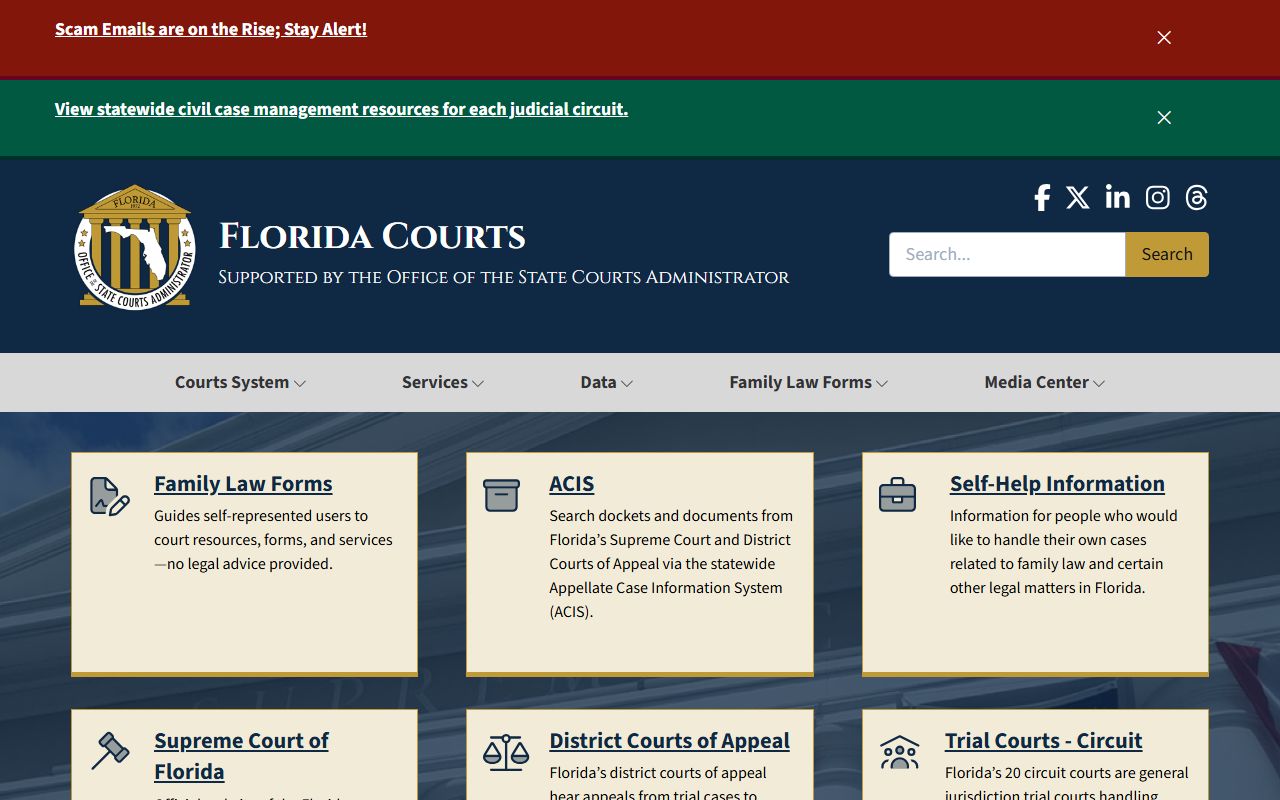
Florida's courts also run councils and committees that guide policy and support access to justice. The site lists court holidays, oral argument schedules, and jury instructions. District Courts of Appeal hear cases from trial courts to fix errors and bring clarity to the law. You can find links to all of these through the state courts portal. Scam emails tied to jury duty have been on the rise, so be alert when you get messages about Florida court records that ask for payment or personal data.
Florida Appellate Case Records
The Appellate Case Information System lets you search court dockets and case documents from all of Florida's appellate courts. ACIS covers the Florida Supreme Court and all six District Courts of Appeal. No registration is needed to search public documents. The system is free for basic court records searches in Florida.
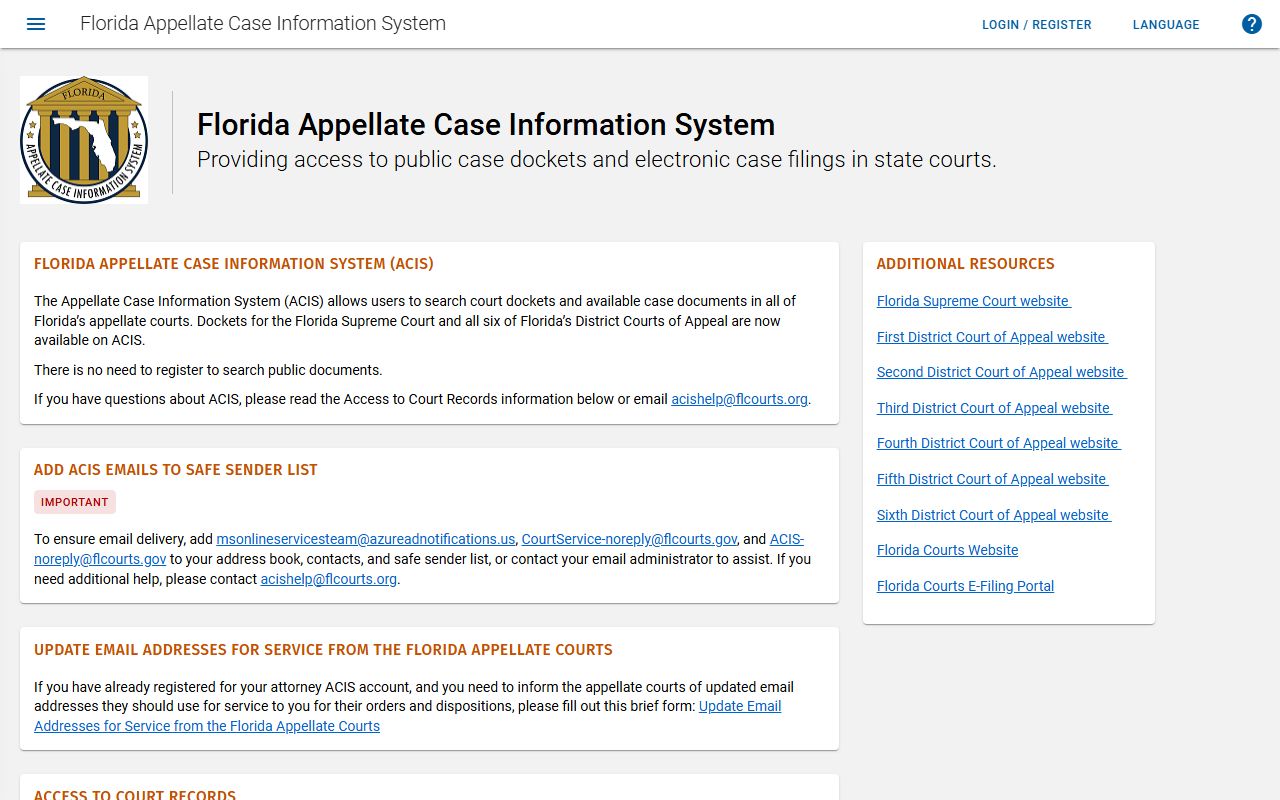
Some case dockets and documents may be restricted by rule or statute in Florida. Attorneys of record and self-represented litigants can register for access to documents in their own cases. If you have already set up an ACIS account in one appellate court, you do not need to register again for the other Florida appellate courts. A user guide is posted at supremecourt.flcourts.gov if you need help with your search. The ACIS account replaced the older eDCA system and now serves as the single search tool for all appellate court records across Florida.
E-Filing in Florida Courts
The Florida Courts E-Filing Portal is the statewide system for filing court documents online. It serves as a single access point for more than 770,000 users across Florida. The portal handles over 30 million documents each year. You can file cases from home at any time since the system runs around the clock. Batch filing saves time for attorneys and litigants who need to submit many documents at once. The portal has saved filers an estimated $38 million in postage over 14 years of use. Under Florida Statute 119.0714, clerks must keep social security numbers and bank account numbers confidential in court records without anyone having to ask.
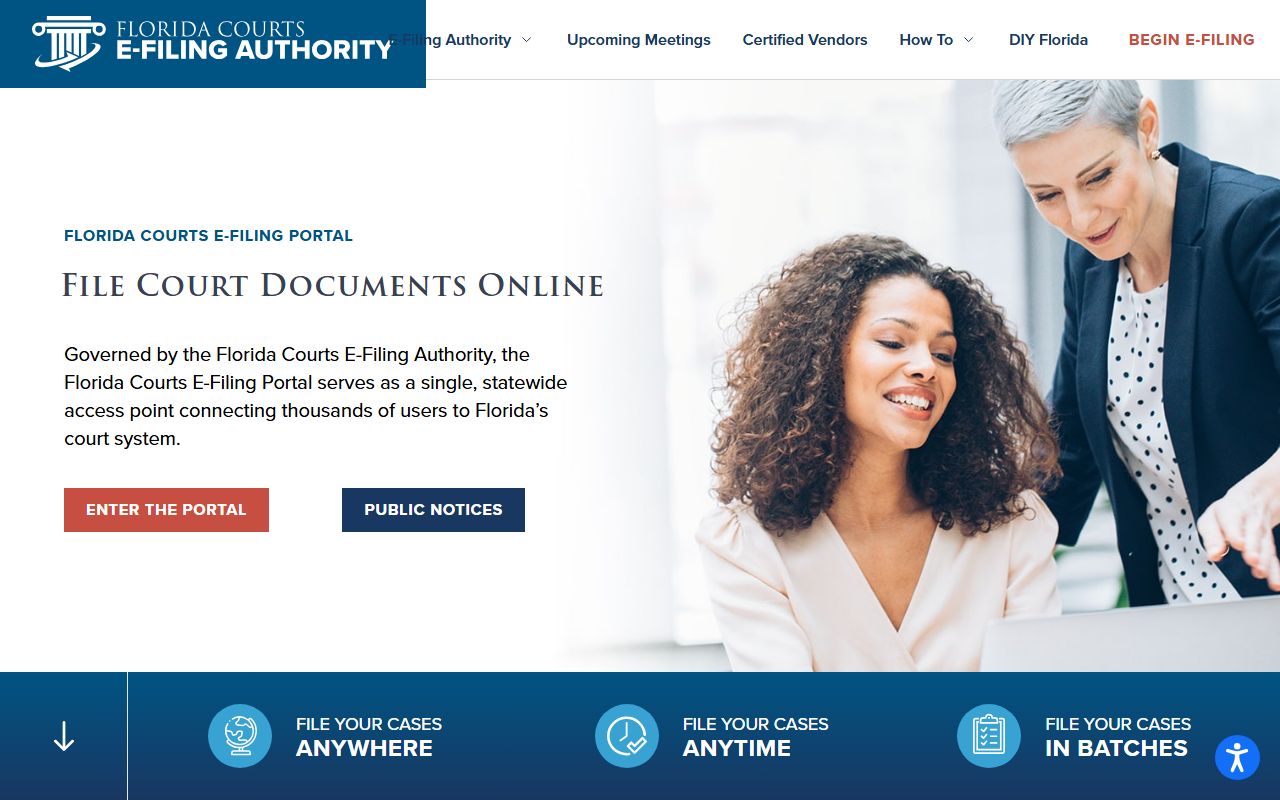
Filing through the portal is free, but court fees and payment processing charges still apply. Credit card transaction fees went up to 3.95% as of July 2025. For help, call the support desk at (850) 577-4609 on weekdays from 8:00 AM to 5:00 PM ET. Self-represented litigants make up a large share of portal users in Florida. Over 220,000 self-represented filers use the system along with 82,000 attorneys and 1,400 judges.
The E-Filing Authority is an intergovernmental body. It includes the 67 elected Clerks of the Circuit and County Court plus the Clerk of the Supreme Court for Florida's appellate courts.
Florida County Clerk Records
Each of Florida's 67 counties has an elected Clerk of the Circuit Court and Comptroller. These clerks carry out nearly 1,000 statutory duties. They safeguard court records, manage official documents, and handle financial tasks for county government in Florida. The Florida Court Clerks & Comptrollers association connects all 67 clerks and provides public services. You can pay traffic citations, search official records, and check jury duty info through their site. The clerks also run the Hope Card Program, which gives free cards to people with final injunctions for protection in Florida.
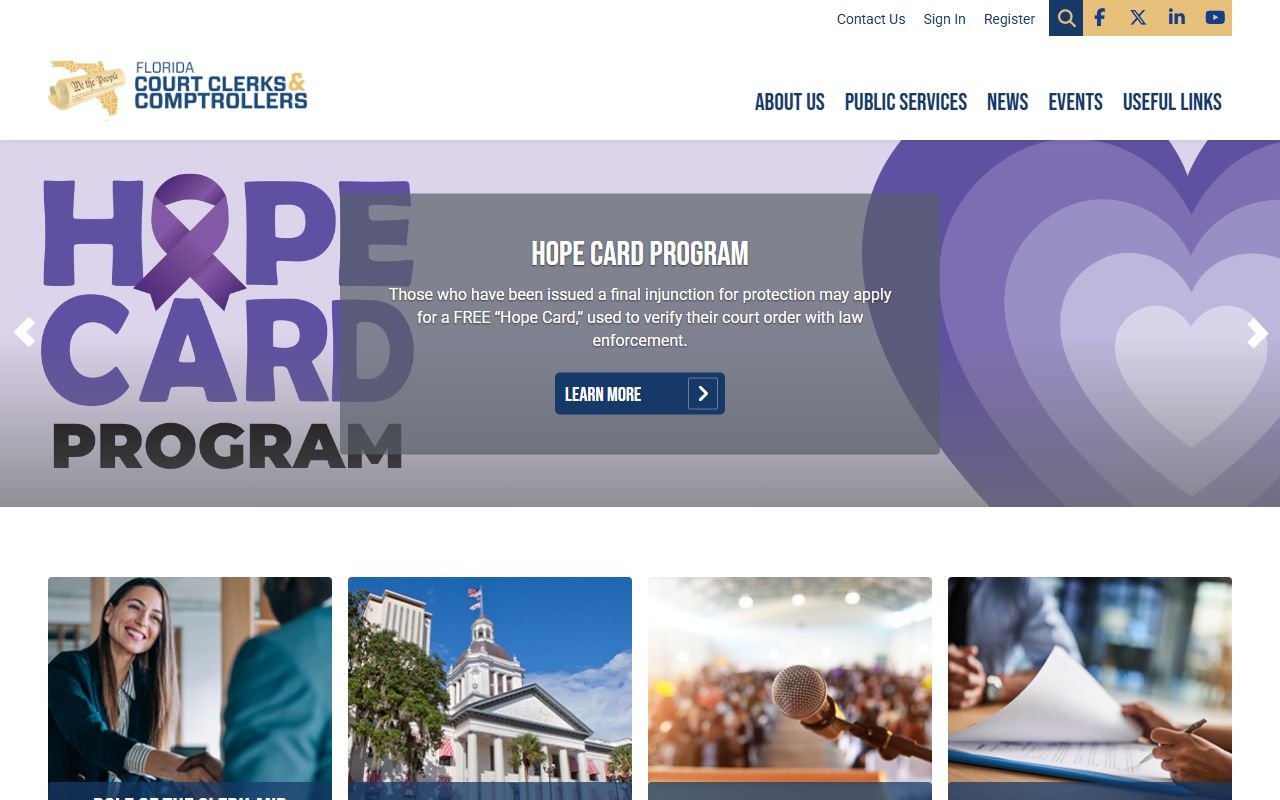
Under Florida Supreme Court Administrative Order AOSC 16-14, clerks can now make many public court document images available for online viewing. The order sets security permissions based on the type of user and the type of case. Cases and documents made confidential by statute or court order stay excluded from public view. Some counties in Florida use the CiviTek Florida portal for online court records search. Larger counties run their own search systems. As of April 2016, new authentication rules require that registered user agreements be notarized before enhanced access to Florida court records is granted.
Florida Court Records Help
Florida Courts Help is the state's self-help center for people who need to work through the court system on their own. The site points you to local self-help centers, free legal aid, and family law forms across Florida. All court forms are provided free of charge by the Florida Supreme Court. Self-help staff can help you find forms and point you to resources, but they cannot give legal advice or tell you how to handle your case.
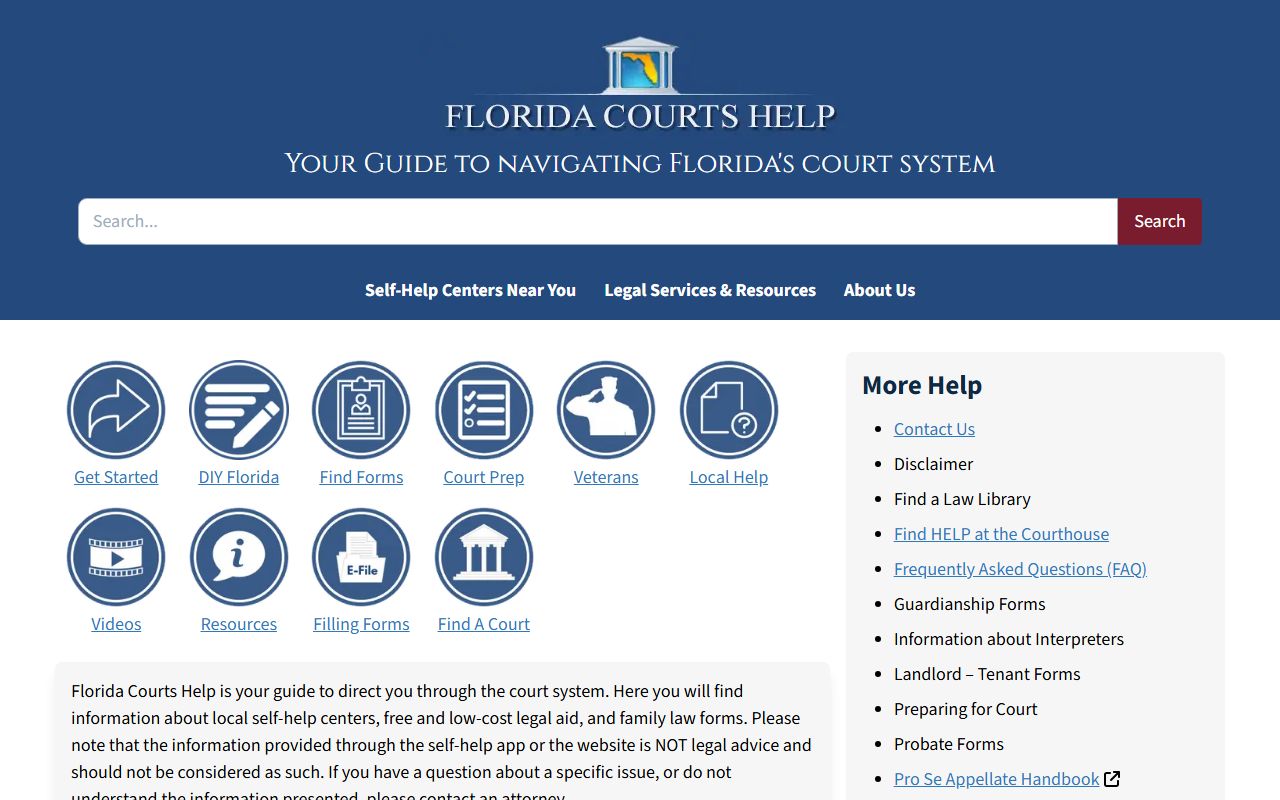
If you have a specific legal question about court records in Florida, contact an attorney. For trouble with forms or if you have a disability that makes a form hard to use, reach the Florida State Courts Self-Help Center at selfhelp@flcourts.org or call (850) 921-0004. A FAQ page on the site covers common questions about Florida court forms and how to use them.
Florida Supreme Court Records
The Florida Supreme Court is the state's highest court. More than 90 men and women have served on it since Florida became a state in 1845. The court posts opinions, oral argument schedules, administrative orders, and standard jury instructions for use across Florida. You can subscribe to get new opinions sent to your email each Thursday morning when regular releases come out.
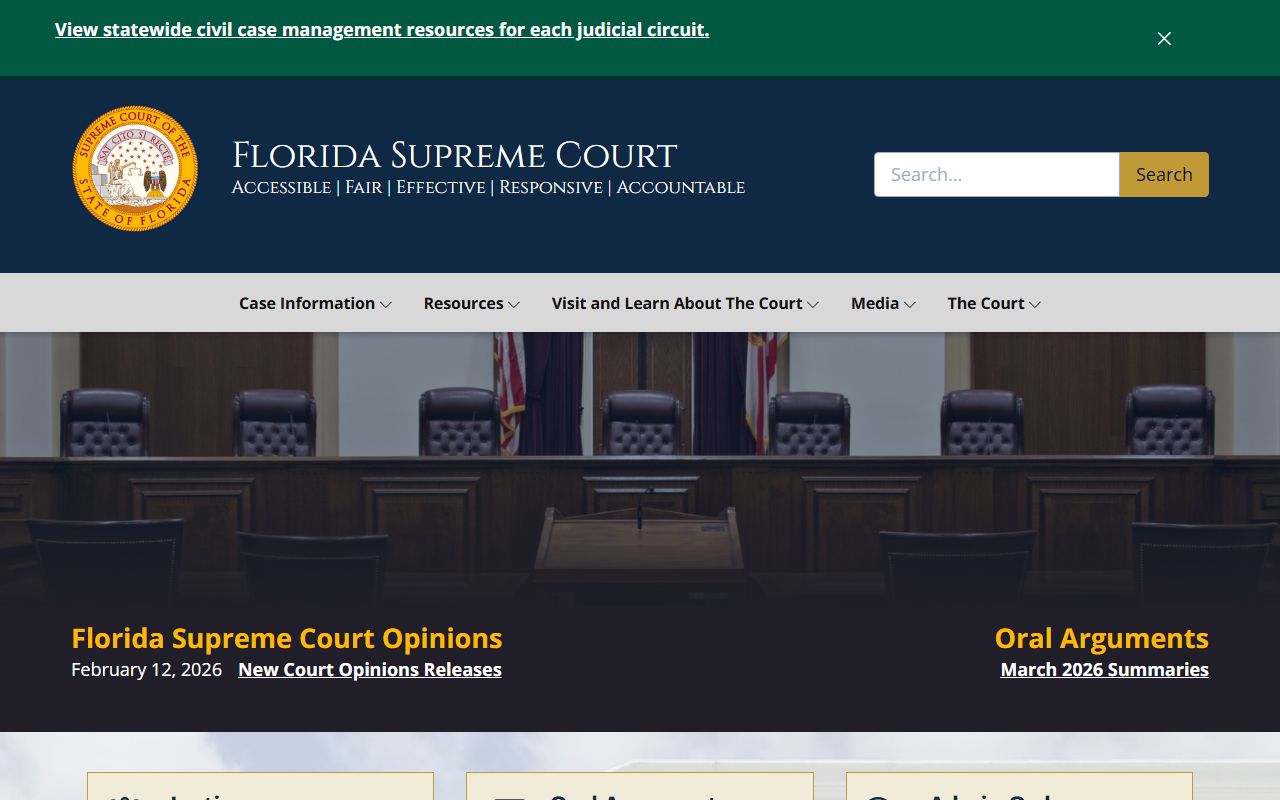
Florida Rule of Judicial Administration 2.420 controls public access to judicial branch records. The public has access to all court records of the judicial branch except those shielded by specific rules. Court records include the contents of the court file, the progress docket, and other documents that track case activity in Florida. Some items are exempt from public access. These include trial court memoranda, draft opinions, and complaints against judges until probable cause is found. You can search Florida Supreme Court administrative orders and published opinions directly through the court's website.
Pay for Florida Court Records
MyFloridaCounty.com is the statewide payment portal for court-related fees in Florida. You can pay child support, traffic tickets, or search official records through this site. Payments go straight to the Florida state dispersal unit. You get instant confirmation that your payment was accepted.
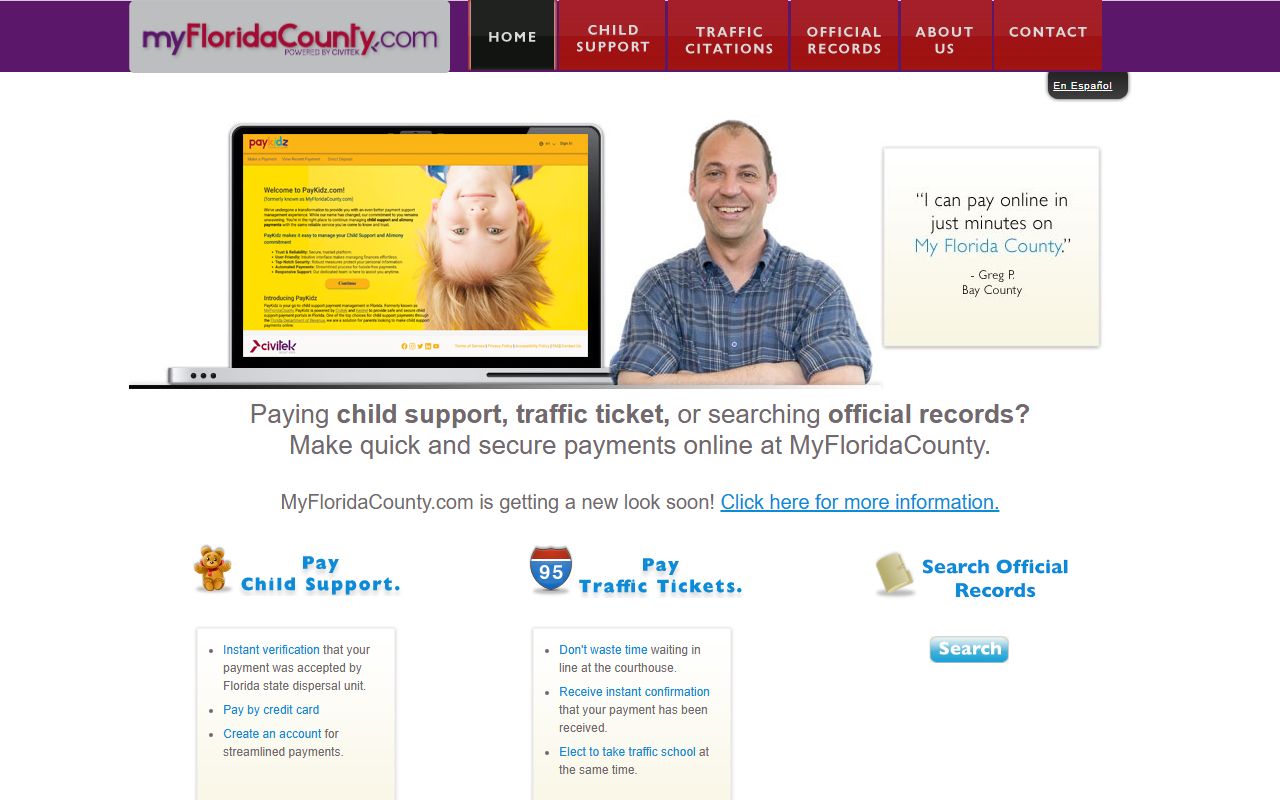
You can create an account for faster payments down the road. The site takes credit cards and sends a receipt right away. Many people use this portal so they do not have to wait in line at the courthouse for Florida court records. You can also choose to take traffic school at the same time if you are paying a citation. The site is getting a new look soon, but all services stay active for Florida court records access and payments.
Browse Florida Counties
Each county in Florida has its own Clerk of the Circuit Court who keeps court records. Pick a county below to find local clerk info, search portals, and resources for court records in that area.
Court Records in Florida Cities
Residents of major Florida cities file court cases at their county courthouse. Pick a city below to learn about court records access in that area.