
Miami Court Records
Miami court records are filed and stored by the Miami-Dade Clerk of the Court and Comptroller at 20 NW 1st Avenue in downtown Miami. As the county seat of Miami-Dade, this is where all circuit and county court filings for the 11th Judicial Circuit are based.
Miami Quick Facts
Miami-Dade Clerk of the Court
The Miami-Dade Clerk of the Court and Comptroller is the office that keeps all court records for Miami and the rest of Miami-Dade County. The current clerk is Juan Fernandez-Barquin, Esq. This office runs both civil and criminal court operations at the main courthouse in downtown Miami.
Miami-Dade is the most populous county in Florida. The clerk handles a huge volume of cases each year. Civil, criminal, family, probate, and traffic matters all go through this one office. Under Florida Statute Chapter 119, court records are public. You can ask to see them unless a judge has sealed the case or the law says it must stay private.
The Miami-Dade Clerk homepage is the starting point for all court record searches in the city of Miami.
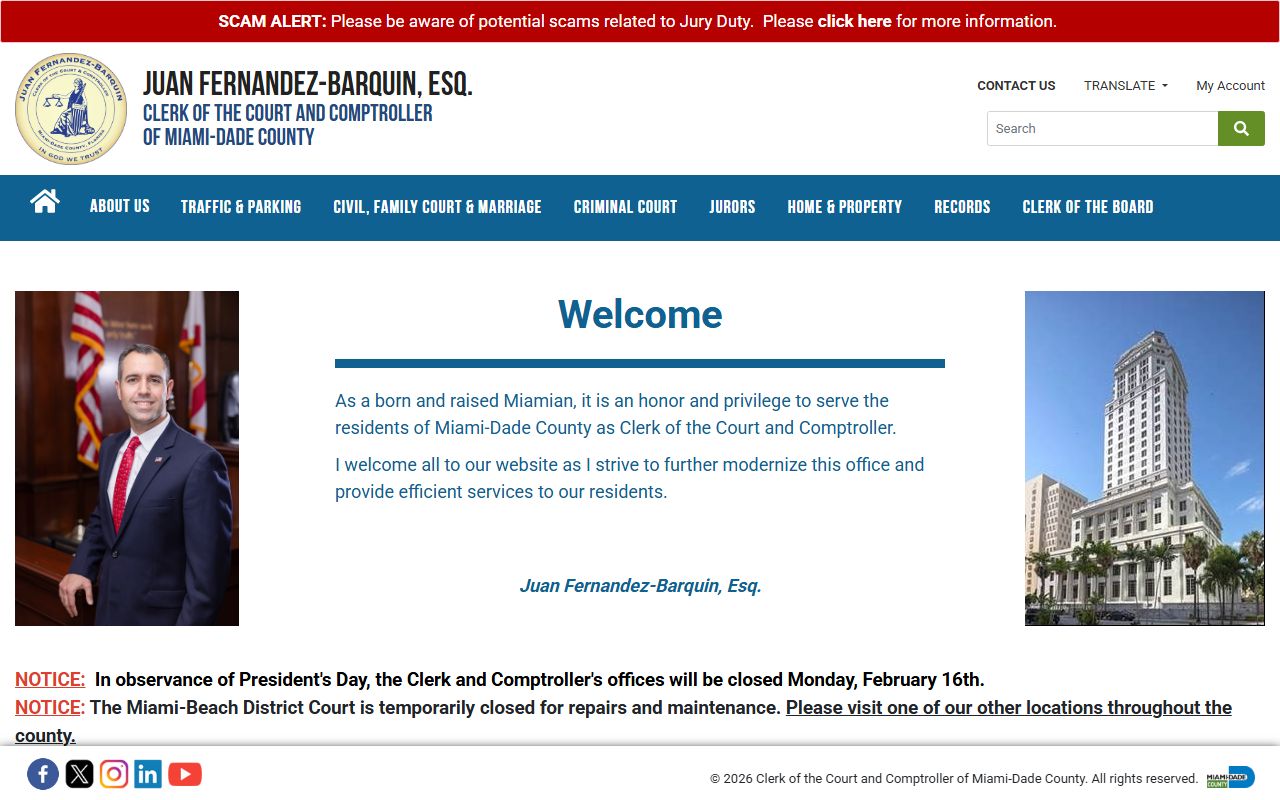
From this page you can reach the case search tool, pay fees, check jury duty info, and find forms. Miami residents handle most court business through this site.
| Office | Miami-Dade Clerk of the Court and Comptroller |
|---|---|
| Clerk | Juan Fernandez-Barquin, Esq. |
| Address | 20 NW 1st Avenue, Miami, FL 33128 |
| Phone | (305) 275-1155 |
| Website | miamidadeclerk.gov |
Search Court Records in Miami
The Online Case Search is the main tool for looking up court records in Miami. You can search by name, case number, or date range. The system covers civil, family, and probate cases filed in Miami-Dade County. It pulls up docket entries, party names, and filing dates for each case.
Basic case searches are free. No account needed. You can check case status or find a court date from any phone or computer. The system runs 24 hours a day.
The Online Case Search portal, also known as QOS, shows results for civil and family cases filed in Miami-Dade County.
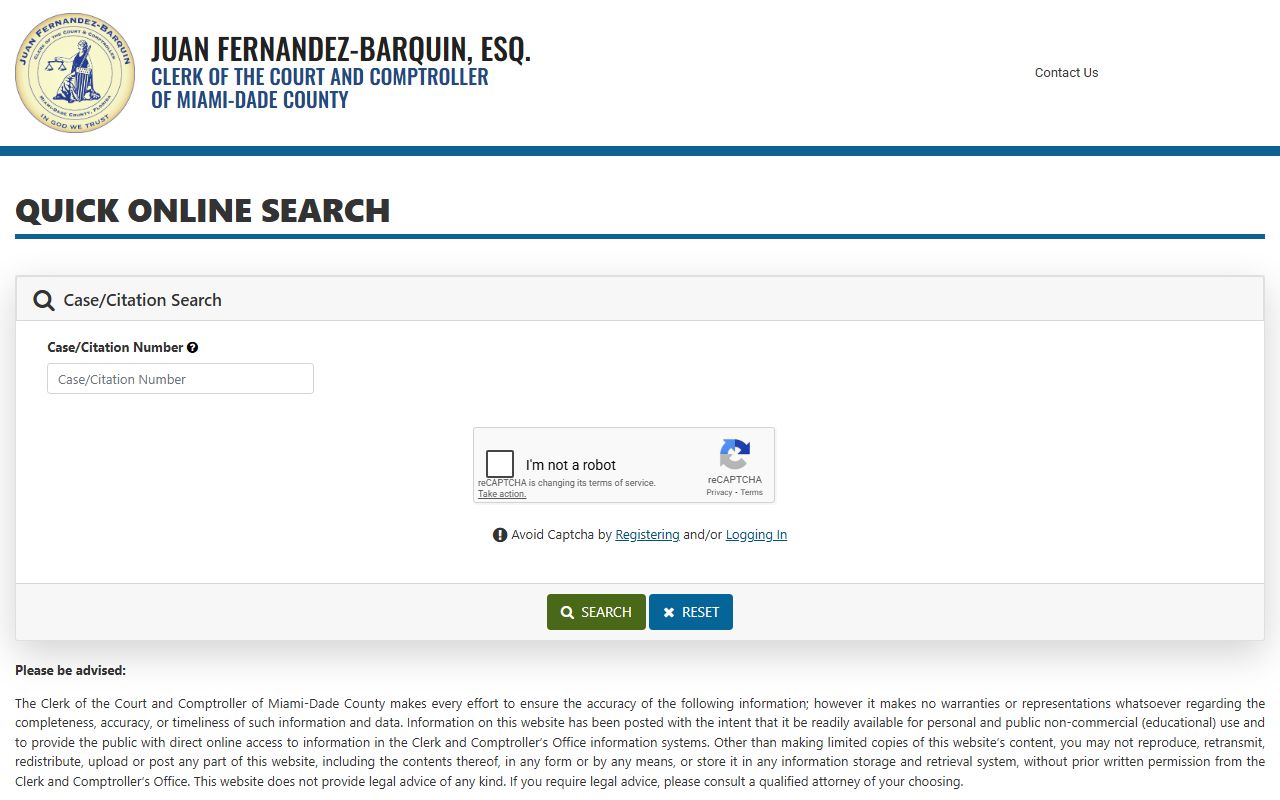
For more detail, you can set up an account. Registered users get access to document images and can track cases over time. Under Florida Statute 119.0714, the clerk keeps sensitive data like social security numbers and bank account info out of public view. No one has to file a request for that. It happens by default.
Criminal court records use a different system. The COIN system handles criminal case lookups in Miami. COIN stands for Criminal Online Information Network. You can search for charges, case status, and hearing dates. Felony cases go to circuit court. Misdemeanors stay at the county level. Both show up in the COIN system.
Miami Criminal Court Records
Criminal cases in Miami go through the 11th Judicial Circuit Court. This is one of the busiest circuits in the state. The clerk stores all criminal records at the main courthouse.
The criminal court page on the clerk's site gives you links to the COIN search, bond info, and case processing details for Miami.
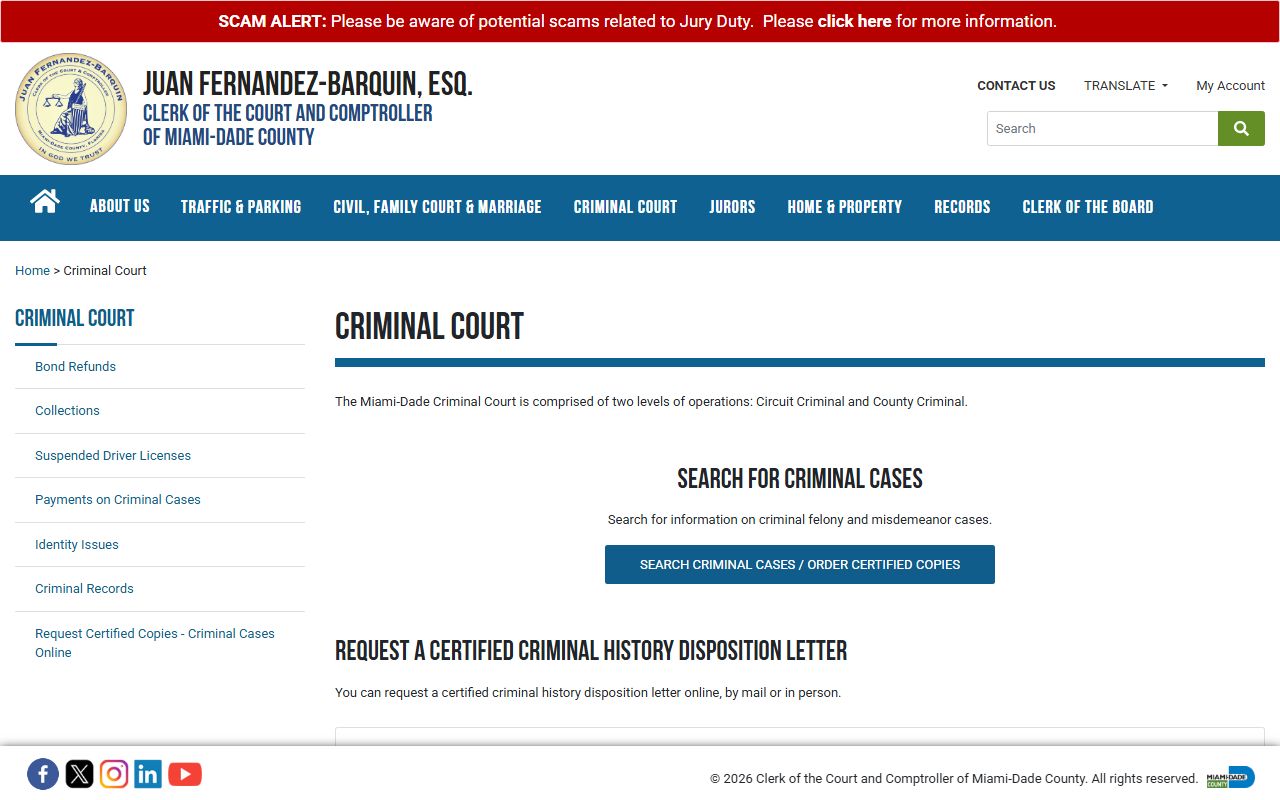
After a search, you can see charges, hearing dates, and disposition info. Booking photos and jail records come from Miami-Dade Corrections, not the clerk. If you need a statewide criminal history check, the Florida Department of Law Enforcement runs that service.
Under Florida Rule of Judicial Administration 2.420, criminal records stay open to the public unless sealed by court order. Juvenile cases are not part of the standard search. They have strict access limits under state law. Miami sees a large number of criminal filings each year, and the COIN system helps people track cases without having to visit the courthouse in person.
Civil and Family Cases in Miami
Civil cases in Miami cover contract disputes, foreclosures, personal injury claims, and small claims matters. Circuit court takes cases over $50,000. County court deals with small claims up to $8,000. The Online Case Search tool covers both levels.
Family court records include divorce, child custody, paternity, and domestic violence filings. Some family records are confidential by law. Child abuse and dependency cases have strict limits on who can view them. The clerk follows state law on what stays public.
Miami residents can file court documents through the Florida Courts E-Filing Portal. Filing is available around the clock. Court fees still apply, and credit card payments carry a processing charge. This portal works for all case types in the 11th Judicial Circuit.
Court Records Services in Miami
The clerk's records page walks you through the tools for each type of search. Civil, family, traffic, and criminal each have their own section. Miami is the hub for the entire county, so most in-person requests go to the main courthouse at 20 NW 1st Avenue.
The records page on the Miami-Dade Clerk site gives direct links to every search tool available for court records in the county.
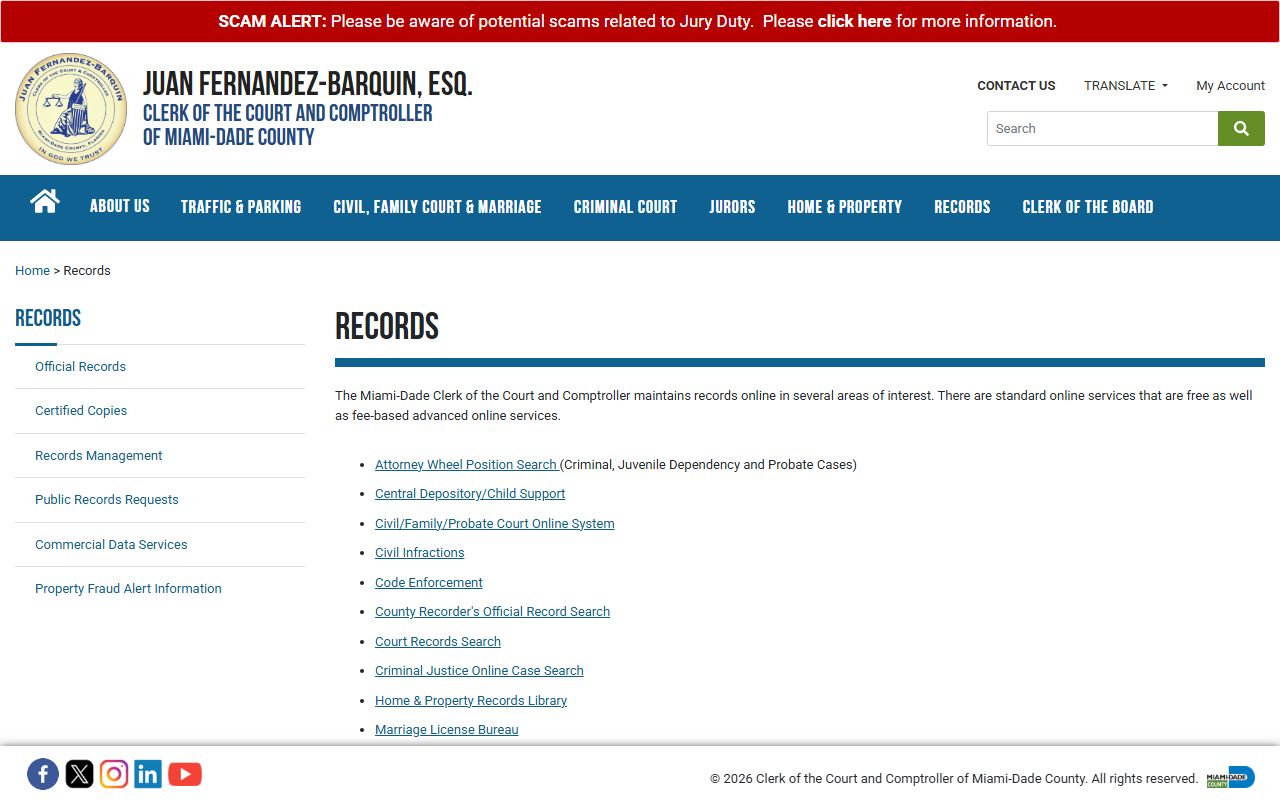
From here you can reach the traffic ticket search, official records, and case filing systems. Miami residents who need certified copies can order them online or at the clerk's office for $7 each.
The Florida Court Clerks & Comptrollers site connects all 67 county clerks in the state. You can use it to pay traffic fines or search records across counties. The Florida Courts Help center has free forms and self-help guides for people filing on their own in Miami. Under Supreme Court Administrative Order AOSC 16-14, the clerk can post public court document images online for viewing. Sealed cases stay out of public view.
For payments, the MyFloridaCounty.com portal lets you pay court fees online. You get a receipt right away. Many Miami residents use it to skip the line at the courthouse. The traffic search tool on the clerk's site is separate from the main case search and lets you look up citations by name or ticket number.
Miami is also served by the Miami-Dade County court system page, which covers all cities in the county. If your case was filed in another county, you need to check with that county's clerk instead.
Nearby Cities
These cities are near Miami in South Florida. Court records for each city go through their county clerk's office.