
Find Seminole County Court Records
Seminole County court records are held by Clerk Grant Maloy at the courthouse in Sanford. The clerk's office serves the 18th Judicial Circuit and manages all civil, criminal, family law, and traffic case files for a county of about 480,000 people. You can search court records online for free through the clerk's public records portal. The Seminole County Clerk of Court maintains public records libraries that can also be easily accessed online. In-person visits are welcome at the Civil Courthouse at 301 N Park Ave in Sanford. The office is open Monday through Friday, 8am to 5pm.
Seminole County Quick Facts
Seminole County Clerk of Court
The Seminole County Clerk of the Circuit Court is led by Clerk Grant Maloy. The main office is at 301 N Park Ave, Sanford, FL 32771. You can reach the clerk by phone at (407) 665-4330 or by email at clerk@seminoleclerk.org. Hours are Monday through Friday, 8am to 5pm. The clerk files new cases, stores court records, issues copies, and runs the public records search tools for Seminole County. Staff can help you find what you need, though they cannot give legal advice.
The clerk handles every type of court case filed in Seminole County. That covers circuit civil, county civil, criminal, family law, probate, juvenile, and traffic cases. Each case creates a file that the clerk maintains from the day it is opened until it closes. Under Florida Statute Chapter 119, court records in Seminole County are public unless a judge seals them or a specific law makes them confidential. Anyone can walk into the courthouse and ask to see a case file. You do not need to be a party in the case to view Seminole County court records.
The Seminole County Clerk homepage is where you start for all court records services and search tools.
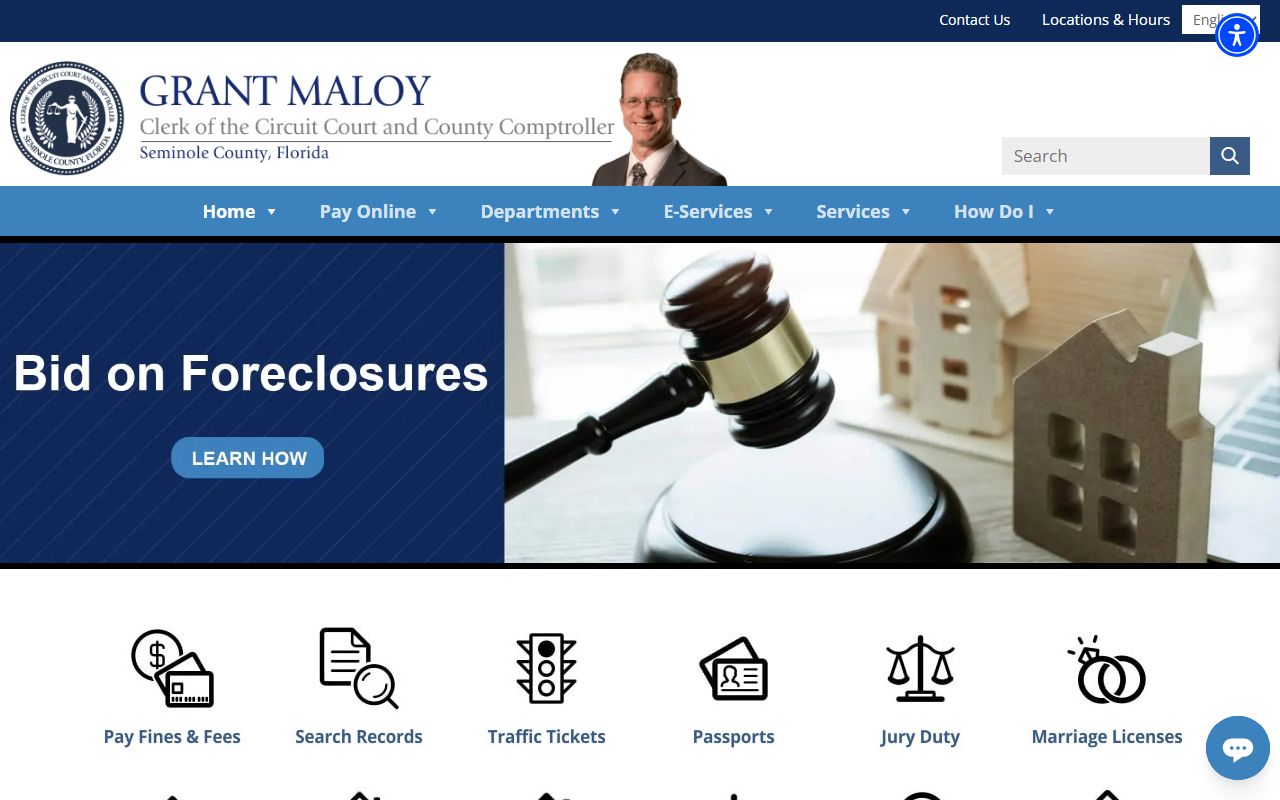
From here you can get to the court records search, public records portal, traffic citation lookup, and more for Seminole County.
| Office | Seminole County Clerk of the Circuit Court |
|---|---|
| Clerk | Grant Maloy |
| Address | 301 N Park Ave, Sanford, FL 32771 |
| Phone | (407) 665-4330 |
| clerk@seminoleclerk.org | |
| Hours | Mon-Fri 8am-5pm |
Search Seminole County Court Records Online
The clerk offers two main tools for searching court records in Seminole County. The public records online portal gives you access to the clerk's public records libraries. You can search for criminal cases, civil and traffic citations, court events, and foreclosure filings. This tool is free. You do not need to set up an account to start looking. Just enter a name or case number and the system pulls up matching results from Seminole County court records.
The second tool is the Seminole County Courts search site. This separate portal focuses on court case searches across all divisions. It covers criminal, civil, family, and traffic cases in Seminole County. Both tools pull from the same set of court records, but the search interfaces are a bit different. Some people find one easier to use than the other, so it is worth trying both if your first search doesn't give you what you need.
The Seminole County public records online portal shows you what is available for free online searches.
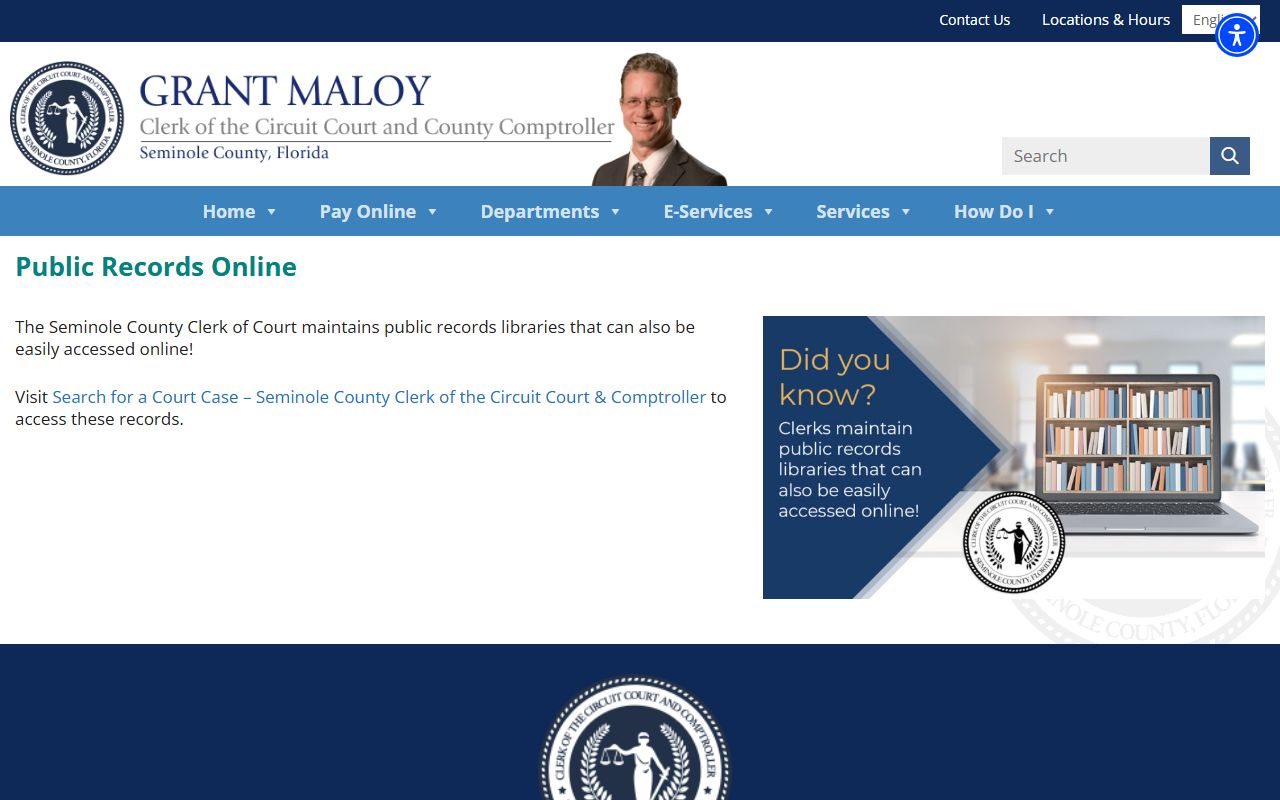
This page lists out the types of records you can search and tells you how to get started with a Seminole County court records lookup.
Under Supreme Court Administrative Order AOSC 16-14, the clerk can make many public court document images available for online viewing. Seminole County takes part in this program. That means you can often see the actual filed documents, not just the docket entries. The clerk reviews items before posting them to make sure confidential data stays hidden from public view in Seminole County court records.
Note: Both the clerk's portal and the courts search site cover Seminole County court records, but they have different search layouts.
Seminole County Courthouse Locations
Seminole County has three courthouse locations, which is more than most counties of its size in Florida. The Civil Courthouse sits at 301 N Park Ave in Sanford. This is where you go for civil cases, family law matters, probate, and the clerk's main office. If you need to file something or pick up copies of court records in Seminole County, the Civil Courthouse is usually the right place to start.
The Criminal Justice Courthouse is at 101 Eslinger Way, also in Sanford. Criminal cases are heard here. If you need court records from a criminal case in Seminole County, the clerk's staff at this location can help. First appearances, arraignments, and criminal trials take place at this building. The Juvenile Justice Center is at 190 Eslinger Way in Sanford as well. Juvenile delinquency and dependency cases are handled there. Juvenile court records have different access rules than adult cases. Most juvenile records are confidential under Florida law.
Having three locations spreads out the workload and makes things a bit easier for people who have business at the court. All three locations are in Sanford, so you do not need to travel far between them. The clerk's office at the Civil Courthouse can tell you which building handles your type of case if you are not sure where to go for Seminole County court records.
The Seminole County Courts homepage gives you details on all three courthouse locations and the case types each handles.
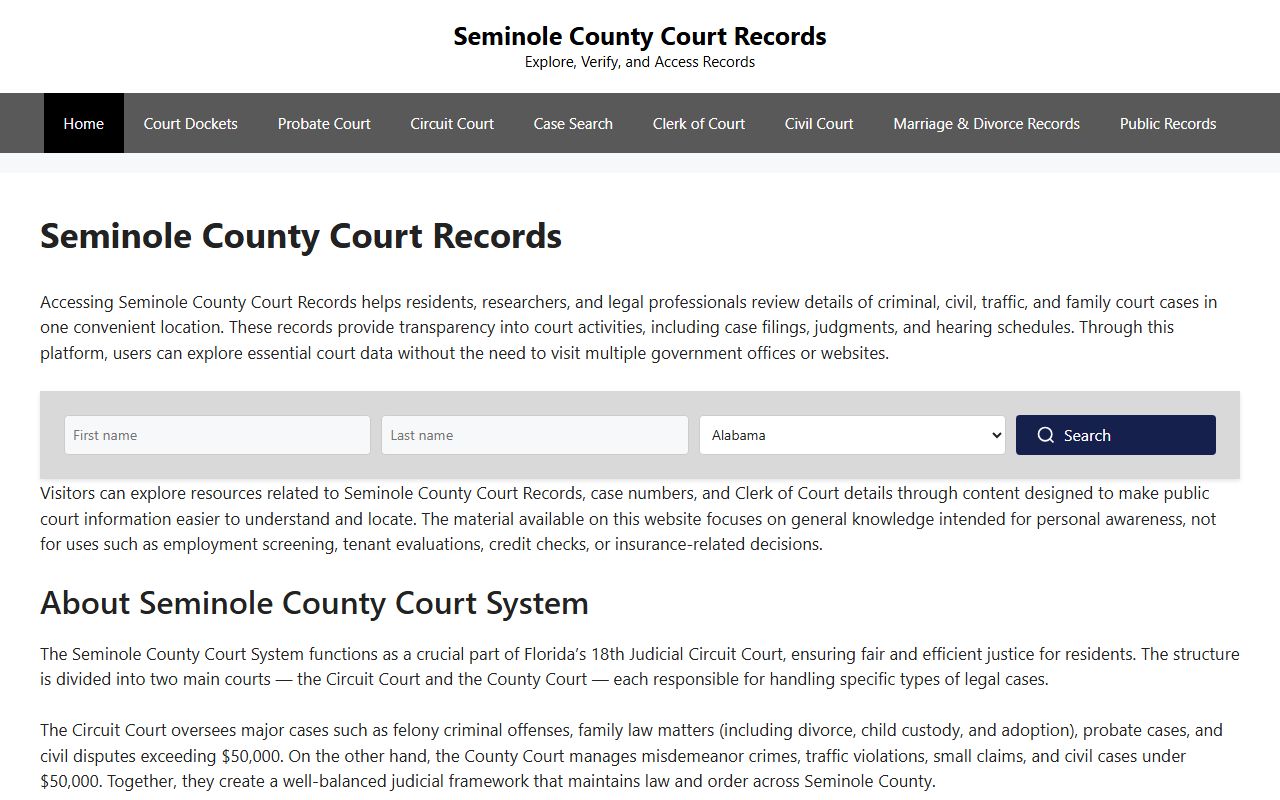
Check this page before you visit to make sure you go to the right building for your Seminole County court records request.
Seminole Court Records by Case Type
The 18th Judicial Circuit handles a wide range of cases in Seminole County. Circuit civil cases cover disputes over $30,000, injunctions, and appeals from lower courts. County civil cases deal with smaller claims and landlord-tenant matters. Both types create court records that the clerk stores and makes available to the public. Family law cases include divorce, custody, child support, paternity, and name changes. Probate covers wills, estates, and guardianships. All of these are searchable through the Seminole County clerk's online tools.
Criminal court records in Seminole County come from both felony and misdemeanor cases. Felonies go to circuit court. Misdemeanors go to county court. Traffic violations are also filed in county court. Each case has its own docket that tracks every motion, order, hearing, and ruling from start to finish. Under Florida Rule of Judicial Administration 2.420, the public can access all judicial branch records unless a specific exemption applies. Sealed cases, juvenile records, and certain mental health filings are among the exceptions in Seminole County court records.
Foreclosure cases get their own attention in Seminole County. The clerk's website has a foreclosure section where you can look up active foreclosure filings. This is useful for anyone tracking real estate activity or checking on a specific property in the county. Foreclosure court records in Seminole County follow the same public access rules as other civil cases.
Confidential Records in Seminole County
Not every court record in Seminole County is open to the public. Florida Statute 119.0714 requires the clerk to redact social security numbers, bank account data, and other sensitive details from court records before releasing them. This happens without anyone having to ask for it. The clerk's office reviews documents and strips out protected information as part of the regular process for all Seminole County court records.
Sealed and expunged records are fully removed from public access. If a judge orders a case sealed in Seminole County, it drops out of every public search tool. The process to seal or expunge a criminal record begins with a form from the Florida Department of Law Enforcement. You file that along with a petition to the court. If the judge grants it, the Seminole County court record is hidden from public view. Only law enforcement and certain agencies can still see it. Juvenile records are also generally confidential. You typically need a court order to view them in Seminole County.
Note: If you file a document in Seminole County court, you must remove confidential info like social security numbers before submitting it.
Legal Resources for Seminole County
The Florida Courts Help center has free forms and self-help guides for anyone who wants to file in Seminole County without a lawyer. Every court form approved by the Florida Supreme Court is available at no cost. The 18th Judicial Circuit also has self-help resources at the courthouse in Sanford. Staff can show you which forms to use and walk you through the steps, though they cannot give legal advice about your Seminole County court case.
All new filings in Seminole County go through the Florida Courts E-Filing Portal. Electronic filing is required for most case types. The portal runs around the clock. Once your filing goes through, the clerk adds it to the case record. You can check on your filing status through the portal at any time. For payments on existing court fees, MyFloridaCounty.com handles online transactions for Seminole County and every other county in the state.
The Florida Court Clerks and Comptrollers association links all 67 county clerks. Their site can help you find court records in any county, not just Seminole. For questions about how the court system works in Florida, the Florida Courts main site has guides, statistics, and contact information. Legal Aid Society of the Orange County Bar Association also serves parts of the Seminole County area with free legal help for people who qualify.
Cities in Seminole County
All court records for cities in Seminole County are filed through the county clerk's office in Sanford. Communities like Altamonte Springs, Casselberry, Lake Mary, Longwood, Oviedo, and Winter Springs all use the same Seminole County court system. There are no separate city courts. Every case in the county goes through the Seminole County Clerk of Court, regardless of which city or town the parties live in.
Nearby Counties
These counties border Seminole County. Each one has its own clerk and its own court records system. Be sure to search in the correct county, since records from one county will not appear in another county's database.